AI Motion Capture Guide
Free AI Hand Motion Capture: Track Hand Gestures Without Sensors
Turn hand gestures and finger movement from an ordinary video into editable 3D animation—without motion-capture gloves, reflective markers, or wearable sensors. This guide explains how AI hand tracking works, how to record cleaner footage, and how to start with QuickMagic’s free plan.
Quick answer
Yes, you can capture hand motion without sensors. Markerless AI analyzes a normal RGB video, detects the wrists, hands, and visible finger joints, and converts their movement over time into animation data. With QuickMagic, you can record on a phone or camera, upload the clip, enable the supported hand-tracking workflow, review the solve, and export motion for a compatible 3D pipeline. The free plan is suitable for a short test; difficult finger overlap, blur, and occlusion may still need cleanup.
What is hand motion capture?
Hand motion capture is the process of recording how a wrist, palm, and fingers move, then representing that performance as digital animation. A hand rig contains many closely spaced joints, so useful capture must preserve more than the hand’s overall position. It should also describe finger bends, spreads, curls, and changes in orientation over time.
Traditional systems may use sensor gloves, reflective markers, depth cameras, or multiple synchronized cameras. Markerless AI hand tracking takes a more accessible route: it estimates motion from visible evidence in standard video. You still need a camera, but you do not wear specialized sensors or prepare a capture volume.
| Motion layer | Examples | Main quality factors |
|---|---|---|
| Wrist and hand | Rotation, direction, waving, pointing, broad gestures | Stable visibility, camera angle, body occlusion |
| Finger articulation | Curling, extending, spreading, pinching, pose changes | Hand size in frame, focus, resolution, finger overlap |
| Temporal motion | Gesture timing, transitions, holds, repeated actions | Frame rate, motion blur, continuous visibility |
| Combined performance | Body, hand, and facial layers in supported workflows | Framing, selected capture options, target pipeline |
How does AI hand tracking work from one video?
A typical finger tracking AI workflow follows four stages. First, computer vision finds the performer and visible hands in each frame. Second, the system estimates landmarks or joint relationships for the wrists, palms, and fingers. Third, it compares those estimates across neighboring frames so the motion behaves as a sequence instead of a collection of unrelated poses. Finally, the tracked performance is mapped to an animation skeleton or target preset that can be reviewed, exported, and retargeted.
This is an estimate, not an X-ray. When one finger hides another, a hand passes behind the body, or fast movement turns into blur, the video contains less evidence. AI may infer a plausible pose, but it cannot guarantee the exact hidden movement. That is why good recording technique matters as much for hands as the capture software.
Important distinction: sensor-free hand mocap is designed to reconstruct visible motion for animation. It is not automatically a certified measurement system, a medical analysis tool, or a sign-language transcription system.
Hand mocap with no sensor: how does it compare?
People searching for “hand mocap no sensor” usually want a faster, lower-cost way to capture gestures. Markerless AI is well suited to iteration, remote performers, solo creators, and early production. Instrumented systems remain valuable when a project needs controlled capture, live streaming, or motion that stays reliable during heavy occlusion.
| Approach | Setup | Strengths | Trade-offs |
|---|---|---|---|
| Single-video AI | Phone, webcam, or camera | Fast setup, remote-friendly, low entry cost, no wearables | Depends heavily on visibility, lighting, and blur |
| Sensor gloves | Calibrated wearable hardware | Direct finger measurements and less dependence on camera view | Hardware cost, calibration, fit, and performer setup |
| Optical markers | Markers plus a multi-camera capture volume | Controlled studio workflow and multi-angle observations | More equipment, space, calibration, and cleanup |
| Manual keyframing | Animator and hand rig | Complete artistic control and deliberate contact poses | Time-intensive for long or naturalistic performances |
For many creators, the most practical workflow is hybrid: use AI hand motion capture for timing and broad articulation, then refine contacts and expressive poses with animation layers or keyframes.
How to capture hand and finger motion with QuickMagic
QuickMagic supports hand and finger-level capture in supported motion-capture workflows. The process starts with ordinary footage and ends with editable motion that can be taken into a compatible 3D tool.
- Plan a short test gesture. Start with five to ten seconds that includes the hardest movement you need: a finger curl, a point, a wave, or a two-handed gesture. A short test makes problems easier to diagnose before you process a longer take.
- Record clear source video. Use 1080p or higher when possible. Keep the hands large enough to show individual fingers, use even front or side lighting, and choose a background that separates the hands from the scene.
- Upload the original clip. Avoid sending the footage through a messaging app that adds heavy compression. Upload the cleanest original file to QuickMagic and trim away unused time.
- Select the performer and hand-tracking options. Confirm the correct subject, choose the appropriate body, hand, camera, pose, and frame-rate settings for the workflow, then generate the source motion.
- Review the fingers before export. Inspect curls, spreads, crossed fingers, wrist orientation, and the frames where hands meet the body or an object. If a section fails, compare it with the source video and consider re-recording from a clearer angle.
- Export, retarget, and validate. Choose an available format or destination preset, match the frame rate and reference pose, and test the animation on the final character. Preserve the original export before editing.
See the official QuickMagic Hand Tracking AI page for the current workflow and the 3D animation export guide for format and retargeting considerations.
Recording tips for more accurate finger tracking AI
Hand capture quality is largely an information problem: the model needs enough clean pixels to distinguish each finger from its neighbors. Use this checklist before you record.
- Record at 1080p or higher when possible.
- Keep both hands comfortably inside the frame.
- Move closer when fingers look small in the preview.
- Use soft, even light without severe backlighting.
- Lock focus or confirm continuous focus stays on the hands.
- Use a stable camera or tripod whenever practical.
- Reduce speed if fast fingers create motion blur.
- Avoid long periods of crossed or interlocked fingers.
- Wear sleeves and use a background that creates contrast.
- Pause briefly in important poses to preserve readable shapes.
Frame the performance for the capture you need
A full-body shot is useful when hand motion must stay synchronized with walking, dancing, or acting, but the hands occupy fewer pixels. A closer upper-body or hand-focused shot provides more finger detail. Decide whether overall performance or fine articulation is the priority, then frame accordingly.
Treat props as an advanced case
Objects can hide fingertips and change the shape of the hand. If the final animation needs a grip, capture the approach and broad gesture with AI, then expect to adjust the exact contact pose, spacing, and penetration on the target character. Object-free takes are generally easier for an initial test.
Is QuickMagic free hand motion capture really free?
QuickMagic currently offers a $0 plan for trying AI motion capture. “Free” means a limited plan, not unlimited processing. The official pricing page lists the following mocap allowances at the time this article was published:
| Price and credits | $0 with 50 V Coins listed for the free plan |
|---|---|
| Maximum clip length | 30 seconds at 30 FPS |
| Maximum upload size | 100 MB |
| Processing | Low-priority queue; up to two queued mocap videos |
| Export | FBX |
| Asset storage | 15 days |
Product limits, credits, formats, and availability can change. Check the live QuickMagic pricing page and your current export menu before committing a production pipeline.
Common hand-tracking problems and practical fixes
Fingers collapse, swap, or flicker
This often happens when fingers overlap or are too small in frame. Move the camera closer, rotate the hand so each finger has a clearer silhouette, slow the gesture, and add more light to shorten motion blur.
The wrist looks stable, but finger motion is weak
Broad hand movement requires fewer pixels than individual articulation. Record at a higher resolution, use a closer crop, and avoid wide full-body framing if detailed fingers are the priority.
Two-handed gestures merge
Separate the hands slightly in depth or screen space. When palms touch or fingers interlock for many frames, a single camera has limited evidence about which joint belongs where.
The motion looks wrong after import
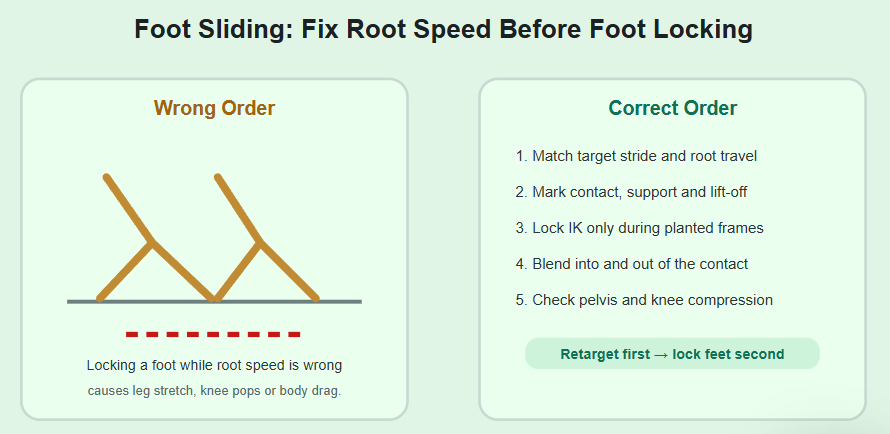
Check the target skeleton preset, reference pose, frame rate, up axis, scale, and root settings. A valid FBX file can still play incorrectly when the source and destination rigs use different conventions. Retarget first, then evaluate the fingers on the final character.
The hand misses an object
Retargeting changes bone lengths and proportions, so a contact that worked for the performer may miss on the character. Use hand IK or animation layers to lock the final contact, correct finger spacing, and prevent mesh intersections.
Where sensor-free hand motion capture is most useful
- Game animation: prototype interactions, emotes, conversational gestures, and first-pass cinematic performances.
- Film and previs: preserve timing and intention before detailed character animation begins.
- VTubers and digital humans: add finger articulation to supported body, hand, and face workflows.
- Indie and remote production: capture performers in different locations without shipping gloves or building a studio.
- Animation reference: create editable timing and pose reference for a hand animator to refine.
- Education and experimentation: test a 3D motion pipeline with a phone and a short free-plan clip.
Sensor-free AI is especially compelling when speed and access matter more than perfect first-pass data. If a scene depends on sustained finger-to-object contact, tightly interlocked hands, or measurement-grade joint accuracy, plan for manual correction or evaluate a more controlled capture method.
Free AI hand motion capture FAQ
Can I do hand motion capture without sensors?
Yes. Markerless AI can estimate wrist, hand, and finger motion from ordinary RGB video, so you do not need tracking gloves, reflective markers, or wearable sensors. Clear hand visibility and good video quality remain essential.
Is QuickMagic hand motion capture free?
QuickMagic currently offers a free plan for trying AI motion capture. It has limited credits, clip length, upload size, queue priority, storage, and export options. Check the current pricing page because plan details can change.
Can AI track individual fingers from one camera?
Yes, when the fingers are large enough in frame, sharp, well lit, and visible. Finger overlap, motion blur, extreme angles, and hands leaving the frame can reduce usable detail or require cleanup.
What camera do I need for hand mocap with no sensor?
A phone, webcam, DSLR, or another camera that records clear RGB video can work. Use 1080p or higher when possible, stable framing, even light, and settings that keep moving fingers sharp.
What file format can I export on the free plan?
The QuickMagic pricing page lists FBX for the current free mocap plan. Other formats and destination presets vary by plan and workflow, so confirm availability in the live export menu.
Can I capture body, hands, and face together?
QuickMagic provides body, hand, and facial motion options in supported workflows. The usable detail depends on framing, resolution, visibility, motion blur, and the selected capture settings.
Does AI hand tracking produce final animation automatically?
It can produce a strong starting point, but production work may still need retargeting, curve cleanup, contact correction, and repairs for occluded or blurred frames. Always review the animation on the final character.
Is a closer shot always better?
A closer shot usually provides more finger detail, but it may lose the relationship between the hands and the full-body performance. Choose framing based on whether fine articulation or whole-body synchronization is more important.
Capture your first hand performance
Record a short, well-lit gesture, keep every finger visible, and turn the video into editable 3D motion with QuickMagic—no suit, gloves, markers, or wearable sensors required.
Try QuickMagic Hand Tracking AIProduct capabilities and free-plan details were checked against QuickMagic’s official Hand Tracking AI, Pricing, and 3D Animation Export Formats pages on July 24, 2026.