Risposta rapida
I dati di body tracking puliti richiedono tre fasi: prevenzione durante la cattura (buona illuminazione, inquadratura corretta, abbigliamento aderente), correzione integrata (risoluzione anti-penetrazione durante il tracking) e pulizia post-cattura (filtraggio del jitter, blocco del contatto dei piedi, interpolazione dei gap). Strumenti AI di motion capture come QuickMagic applicano automaticamente la correzione della penetrazione durante il solving, ma la maggior parte dei progetti beneficia ancora di una leggera pulizia in Blender, MotionBuilder o Maya prima del retargeting finale. I maggiori vantaggi derivano dalla correzione precoce delle auto-penetrazioni, dall'applicazione di uno smoothing temporale a 6-8 Hz e dal blocco dei contatti dei piedi durante le fasi di appoggio.
Cosa Causa Dati di Body Tracking Sporchi?
I dati di body tracking grezzi provenienti da qualsiasi sistema, sia ottico, inerziale o basato su AI, contengono artefatti. Questi artefatti rientrano in cinque categorie. Comprendere quali influenzano il tuo footage è il primo passo in qualsiasi flusso di pulizia del body tracking.
Jitter
Rumore ad alta frequenza nelle posizioni e rotazioni delle articolazioni. Gli arti sembrano vibrare o tremare. Causato da errori di previsione per fotogramma, bassa risoluzione, motion blur e scarsa illuminazione.
Auto-penetrazione
Parti del corpo si intersecano in modo non realistico, ad esempio un braccio che passa attraverso il torso o una mano che taglia una gamba. Si verifica quando il risolutore manca di consapevolezza delle collisioni o dei limiti articolari.
Scivolamento del piede
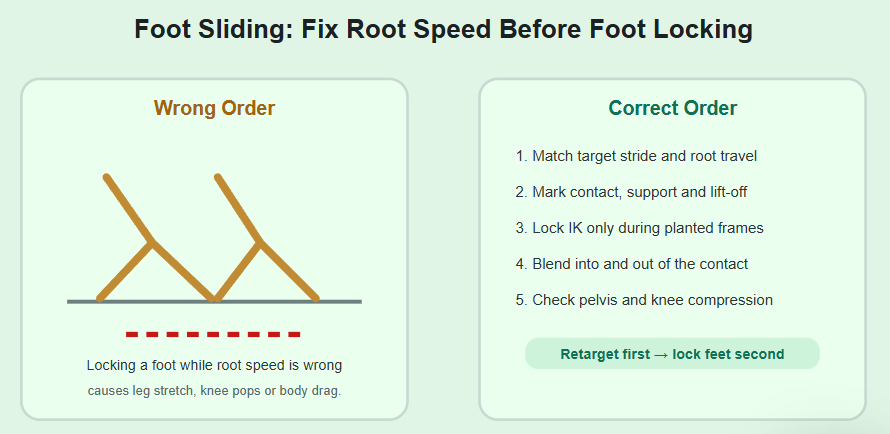
I piedi scivolano sul pavimento durante le fasi di contatto invece di rimanere piantati. Causato dalla deriva del movimento radice, dal rilevamento impreciso del piano di terra o dalla compensazione del movimento della telecamera.
Salti di movimento
Improvvisi salti nella posizione delle articolazioni tra fotogrammi adiacenti. Tipicamente causati dal recupero dell'occlusione, quando il tracker perde un arto e lo riposiziona bruscamente quando la visibilità ritorna.
Fotogrammi mancanti
Lacune nei dati di animazione in cui il tracking è completamente fallito. Comuni durante movimenti veloci, occlusioni pesanti o quando il soggetto esce parzialmente dall'inquadratura.
Perché l'AI Mocap è Più Incline a Certi Artefatti
Il body tracking markerless basato su AI predice posizioni articolari 3D da fotogrammi video 2D. A differenza dei sistemi ottici che tracciano fisicamente marcatori riflettenti, i sistemi AI inferiscono la posa dai dati dei pixel. Questo li rende particolarmente suscettibili a jitter (perché ogni fotogramma è predetto indipendentemente) e auto-penetrazione (perché il processo di sollevamento 2D-3D non impone intrinsecamente vincoli di collisione fisica). Tuttavia, le moderne piattaforme di mocap AI affrontano questi problemi con risolutori anti-penetrazione integrati e smoothing temporale che riducono significativamente gli artefatti prima che i dati raggiungano il tuo software 3D.
Pulizia del Body Tracking: Un Flusso di Lavoro Passo dopo Passo
Il seguente flusso di lavoro si applica a qualsiasi fonte di dati mocap, sia che tu stia usando QuickMagic, DeepMotion, Rokoko Vision o dati grezzi da un sistema ottico. L'obiettivo è ottenere dati mocap puliti con il minimo keyframing manuale.
Valuta i Tuoi Dati Grezzi
Prima di toccare qualsiasi cosa, riproduci l'animazione a velocità normale e al 25% della velocità. Prendi nota degli artefatti specifici che vedi: dove appare il jitter (di solito estremità come mani e piedi)? Dove si verifica la penetrazione (di solito le braccia che incrociano il torso)? Dove avviene lo scivolamento del piede (di solito durante cicli di camminata o corsa)? Questa valutazione determina quali passaggi di pulizia sono effettivamente necessari. Non ogni clip richiede tutti e cinque i passaggi.
Blender: Dope Sheet MotionBuilder: Story ModeRisolvi Prima i Problemi di Penetrazione
La correzione della penetrazione dovrebbe essere applicata prima di altre correzioni perché lo smoothing e l'interpolazione possono amplificare le intersezioni se spostano gli arti più vicini. Se il tuo strumento di cattura ha un anti-penetrazione integrato (QuickMagic lo ha), assicurati che sia abilitato prima dell'esportazione. Se stai pulendo in post, l'approccio dipende dalla gravità:
- Penetrazione minore (arti che sfregano appena): Applica un vincolo di limite articolare che blocchi le rotazioni a intervalli biomeccanicamente validi. La maggior parte dei sistemi di rigging lo supporta nativamente.
- Penetrazione moderata (intersezione visibile): Usa un risolutore consapevole delle collisioni. In MotionBuilder, plotta su un Control Rig e trascina manualmente gli effettori fuori dal corpo nei fotogrammi peggiori, quindi imposta la correzione su un layer additivo. In Blender, usa la Pose Mode con vincoli IK per spingere gli arti lontani.
- Penetrazione severa (artiti profondamente incastrati): Questi fotogrammi probabilmente hanno avuto una forte occlusione durante la cattura. Considera di ricatturare quel segmento con angoli di telecamera migliori, o usa uno strumento di pulizia AI che può predire la posa corretta dai fotogrammi circostanti.
Riduci Jitter e Rumore ad Alta Frequenza
Il jitter è l'artefatto più comune nei dati AI mocap. Il principio chiave: abbastanza smoothing da rimuovere il rumore, ma non tanto da perdere dettagli di movimento intenzionali. Un eccesso di smoothing rende l'animazione fluttuante e robotica.
- Filtro Butterworth passa-basso a 6-8 Hz: Lo standard industriale per la riduzione del rumore mocap. In MotionBuilder, seleziona tutte le articolazioni e applica il filtro Butterworth con frequenza di taglio a 7 Hz. Questo rimuove il jitter ad alta frequenza preservando il movimento deliberato.
- Smooth Keys in Blender: Apri il Graph Editor, seleziona tutti i keyframe e usa Key > Smooth Keys (Shift+O). Applica 2-3 iterazioni per rumore moderato. Per jitter grave, aggiungi un modificatore Smooth alle F-curve.
- Decima per ridurre i keyframe: Dopo lo smoothing, usa Decimate per ridurre la densità dei keyframe. L'AI mocap produce spesso un key per fotogramma, che non è necessario dopo lo smoothing. Un rapporto di 0.3-0.5 di solito preserva la qualità del movimento rendendo il file più facile da modificare.
Correggi lo Scivolamento del Piede e i Contatti a Terra
Lo scivolamento del piede è l'artefatto più visibile per il pubblico, anche i non animatori lo notano. La correzione prevede l'identificazione delle fasi di contatto e il blocco della posizione del piede durante quei fotogrammi.
In MotionBuilder: Crea un effettore ausiliario sul piede. Scorri all'inizio di ogni fase di contatto, blocca la posizione dell'effettore e imposta l'influenza di reach al 100% durante il contatto e allo 0% durante la fase di swing. Usa la finestra FCurves per smussare la transizione tra gli stati bloccato e sbloccato.
In Blender: Identifica i fotogrammi di contatto nel Graph Editor cercando bassa velocità sulle ossa del piede. Appiattisci le curve di posizione durante quei fotogrammi. In alternativa, cuoci prima il mocap su ossa FK, poi aggiungi vincoli IK per mantenere la posizione del piede durante il contatto.
Suggerimento preventivo: Se stai catturando con QuickMagic, usa la modalità telecamera statica per clip di locomozione. I filmati con telecamera in movimento introducono una compensazione del movimento radice che può amplificare lo scivolamento del piede.
MotionBuilder: Aux Effector + Reach Blender: IK Foot LockColma i Gap e Smussa le Transizioni
Fotogrammi mancanti e salti di movimento creano discontinuità che rompono l'immersione. Per brevi gap (1-5 fotogrammi), l'interpolazione lineare o spline è solitamente sufficiente. Per gap più lunghi, usa la ricostruzione predittiva basata sul contesto del movimento circostante. La maggior parte dei software 3D gestisce automaticamente i brevi gap quando elimini i keyframe corrotti e lasci che l'interpolazione li riempia. Per i salti di movimento (bruschi balzi), seleziona i fotogrammi incriminati, cancellali e lascia che l'interpolazione smussi la transizione. Se il salto è causato dal recupero dell'occlusione, controlla se il tuo strumento di cattura offre una modalità di gestione dell'occlusione che predice la posizione degli arti durante i punti ciechi.
Correzione della Penetrazione durante il Tracking: Come Funziona
La correzione della penetrazione durante il tracking è il processo di rilevamento e risoluzione delle auto-collisioni nei dati di movimento corporeo 3D. È uno degli aspetti tecnicamente più impegnativi della pulizia del body tracking perché richiede che il sistema capisca non solo dove sono le articolazioni, ma quale volume occupa ogni segmento corporeo e se quei volumi si intersecano.
Tre Approcci alla Correzione della Penetrazione
| Approccio | Come Funziona | Punti di Forza | Limitazioni |
|---|---|---|---|
| Applicazione dei Limiti Articolari | Blocca le rotazioni articolari a intervalli biomeccanicamente validi, impedendo pose che causerebbero penetrazione | Veloce, in tempo reale, nessun overhead di calcolo | Non può risolvere la penetrazione causata da errori di traslazione; intercetta solo collisioni basate su rotazione |
| Ottimizzazione Consapevole delle Collisioni | Costruisce un modello di collisione dai volumi dei segmenti corporei e spinge le parti intersecate lontano lungo le normali della superficie | Risolve intersezioni visibili; funziona su errori di traslazione | Costoso dal punto di vista computazionale; può introdurre salti di movimento se le correzioni sono troppo aggressive |
| AI Informata dalla Fisica | Addestra reti neurali su dati di movimento fisicamente validi in modo che il modello penalizzi pose geometricamente impossibili durante l'inferenza | Previene la penetrazione prima che si verifichi; preserva il flusso naturale del movimento | Richiede dati di addestramento; potrebbe non cogliere nuovi casi limite |
Anti-penetrazione Integrato di QuickMagic
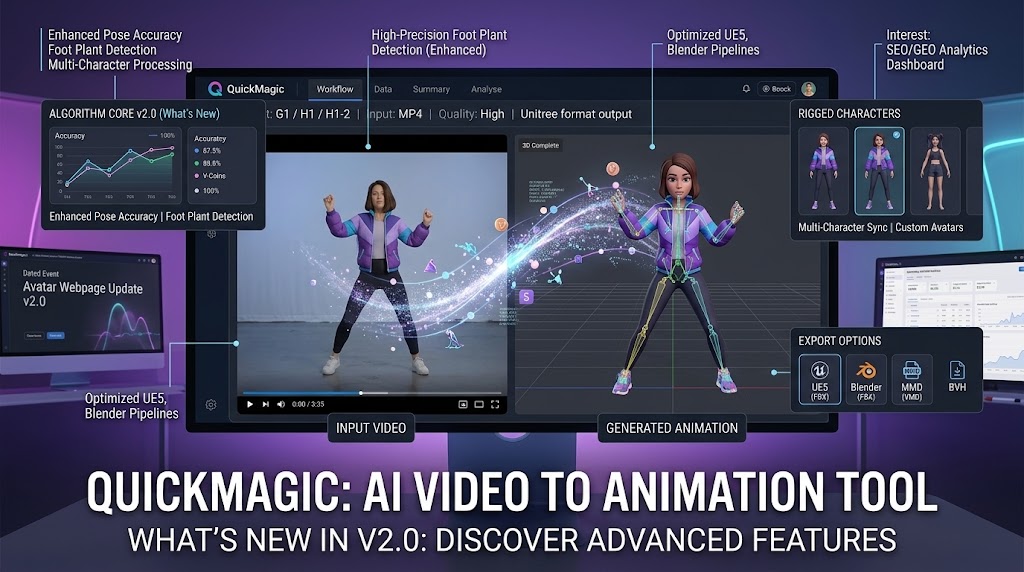
QuickMagic applica la correzione della penetrazione durante la fase di solving, prima di esportare i dati di animazione. Quando carichi un video, l'AI stima prima le posizioni articolari 3D fotogramma per fotogramma, poi esegue un passaggio post-solving che impone i limiti articolari e risolve le auto-collisioni rilevate. Ciò significa che il file FBX, BVH o BIP che esporti ha già artefatti di penetrazione ridotti rispetto alle previsioni grezze per fotogramma. Per la maggior parte dei filmati di danza, sport e performance, la correzione integrata è sufficiente per un'anteprima pulita. Interazioni complesse come rotoli di combattimento, grappling stretto o contatto multi-soggetto possono ancora richiedere una pulizia manuale in post.
Quando l'Anti-penetrazione Integrato è Sufficiente:
- Locomozione standard: camminata, corsa, salto
- Cattura di danza e performance
- Gestualità della parte superiore del corpo e contenuti VTubing
- Clip sportive senza contatto corporeo pesante
- Cattura di un singolo soggetto con inquadratura chiara
Quando Serve Pulizia Manuale della Penetrazione:
- Scene di combattimento o grappling con contatto corporeo prolungato
- Interazione multi-soggetto in cui gli arti si incrociano tra personaggi
- Movimenti da seduti o a terra con forte auto-occlusione
- Clip catturate con inquadratura scarsa che hanno causato errori di tracking significativi
- Lavoro di doppi digitali ad alta fedeltà che richiede risoluzione di collisione a livello di mesh
Confronto: Pulizia al Momento della Cattura vs Post-Cattura
La strategia più efficiente di pulizia del body tracking dipende da quando applichi le correzioni. Alcune correzioni sono meglio gestite al momento della cattura, mentre altre richiedono una post-elaborazione nel software 3D.
| Artefatto | Correzione al Momento della Cattura | Correzione Post-Cattura | Priorità Consigliata |
|---|---|---|---|
| Jitter | Migliore illuminazione, risoluzione più alta, movimento più lento | Filtro Butterworth, Smooth Keys, smoothing temporale | Post-cattura (lo smoothing è affidabile e veloce) |
| Penetrazione | Risolutore anti-penetrazione integrato ( |