QuickMagic FBX → MetaHuman Körperanimation
MetaHuman Retargeting-Anleitung: QuickMagic MoCap zu UE5.6/5.7
Importieren Sie QuickMagic FBX-Bewegungen in Unreal Engine, erstellen Sie Quell- und MetaHuman-IK-Rigs, gleichen Sie T-Pose- und A-Pose-Unterschiede ab, ordnen Sie Retarget-Ketten zu, exportieren Sie Ziel-Animation-Sequenzen, beheben Sie Fußgleiten und kombinieren Sie Körper- und Gesichtsausdrucks-Animation in der Sequencer.

Workflow auf einen Blick

Sehen Sie das originale UE5.6/5.7 MetaHuman-Tutorial
Das originale QuickMagic Video zeigt den im Quellartikel zusammengefassten sechsschrittigen Workflow. Die schriftliche Version unten erweitert ihn um Import-Entscheidungen, Kettenvalidierung, Posen-Ausrichtung, Fußkontakt-Korrekturen, Gesichtsspur-Handhabung und UE5.6+-Fehlerbehebung.
Bevor Sie beginnen
Sie benötigen:
- Einen QuickMagic FBX-Animationsexport und, falls nötig, ein neutrales/T-Pose-Quell-Skelett
- Unreal Engine 5.6 oder 5.7
- Einen zusammengesetzten MetaHuman-Charakter im Projekt
- Die IK Rig- und IK Retargeter-Funktionen im Projekt verfügbar
- Das originale Performance-Video zur Validierung
- Eine Entscheidung zwischen exportierten Animation Sequences und Laufzeit-Retargeting
| Ziel | Empfohlener Weg |
|---|---|
| QuickMagic FBX in wiederverwendbare MetaHuman-Clips umwandeln | Erstellen Sie einen IK-Retargeter und exportieren Sie duplizierte Animation Sequences. |
| Einen MetaHuman dynamisch von einem anderen Charakter aus steuern | Verwenden Sie Laufzeit-IK-Retargeting, nachdem der Retargeter offline korrekt funktioniert. |
| Gesichtsausdrücke zum Körper-MoCap hinzufügen | Erstellen oder importieren Sie eine separate Gesichtssequenz und kombinieren Sie sie im Sequencer. |
| Zwischen zwei MetaHumans retargeten | Verwenden Sie die von MetaHuman bereitgestellten Retarget-Assets oder den Laufzeit-MetaHuman-Workflow, wo angemessen. |
1Generieren und exportieren Sie eine saubere QuickMagic Bewegungsdatei
- Laden Sie eine klare Performance in QuickMagic hoch.
- Überprüfen Sie Körperausrichtung, Wurzelbewegung, Füße, Handrichtung und Subjektidentität.
- Wählen Sie eine Unreal-orientierte Ausgabe, wenn sie mit dem beabsichtigten UE-Skelett-Workflow übereinstimmt.
- Verwenden Sie eine generische FBX-Quelle, wenn Sie ein explizites Quell-Skelett und ein benutzerdefiniertes IK-Rig benötigen.
- Passen Sie die Ausgabe-Bildrate an das UE-Projekt an.
- Bewahren Sie einen unberührten Quell-Export auf.
2Importieren Sie das QuickMagic Skelett und die Animation
- Erstellen Sie einen Ordner wie
Animations/QuickMagic/Source. - Importieren Sie das FBX über den Content Browser.
- Importieren Sie das Quell-Skeletal Mesh/Skelett beim ersten Durchlauf, wenn noch kein kompatibles Quell-Asset existiert.
- Aktivieren Sie den Animation-Import und verwenden Sie den vollständigen exportierten Frame-Bereich.
- Deaktivieren Sie unnötige Materialien und Texturen für eine reine Bewegungsquelle.
- Öffnen Sie die Animation Sequence und überprüfen Sie Maßstab, Ausrichtung, Dauer und Root-Bewegung.
| Import-Symptom | Wahrscheinliche Ursache | Korrekturmaßnahme |
|---|---|---|
| Charakter liegt oder zeigt seitwärts | Axis-Konvertierungsabweichung | Importieren Sie erneut mit der korrekten Szenenkonvertierung, anstatt jeden Knochen zu drehen. |
| Quelle ist extrem groß oder klein | Einheiten- oder Maßstabsabweichung | Korrigieren Sie den FBX-Importmaßstab vor der Erstellung von IK-Assets. |
| Nur T-Pose | Animation deaktiviert, falscher Take oder falsches Skelett | Importieren Sie erneut mit aktivierter Animation und überprüfen Sie den exportierten Bereich. |
3Erstellen Sie das QuickMagic Quell-IK-Rig
- Erstellen Sie im Content Browser ein Animation → IK Rig-Asset.
- Weisen Sie das importierte QuickMagic Quell-Skeletal Mesh zu.
- Setzen Sie die Retarget-Wurzel auf das Becken oder den Quell-Knochen, der die Körperbewegung repräsentiert.
- Verwenden Sie Automatische Retarget-Ketten, wenn die Quell-Namensgebung erkannt wird.
- Überprüfen Sie manuell Wirbelsäule, Nacken, Kopf, Arme und Beine.
- Fügen Sie Hand-, Finger-, Zehen- oder Schlüsselbein-Ketten nur hinzu, wenn sie benötigt und korrekt zugeordnet werden.
4Konfigurieren Sie das MetaHuman-Ziel-IK-Rig
Verwenden Sie das MetaHuman-Körper-Skeletal Mesh als Ziel. Abhängig vom Projekt und der MetaHuman-Version ist möglicherweise bereits ein geeignetes MetaHuman-IK-Rig oder ein Retarget-Asset vorhanden. Erstellen Sie andernfalls ein Ziel-IK-Rig.
- Weisen Sie das MetaHuman-Körper-Skeletal Mesh als Vorschau-Mesh zu.
- Setzen Sie die Ziel-Retarget-Wurzel.
- Verwenden Sie Automatische Retarget-Ketten erstellen; MetaHuman-Skelette werden von Epics Auto-Retarget-Vorlagen unterstützt.
- Verwenden Sie Automatische IK/FBIK erstellen, wenn dies für den beabsichtigten Kontakt-Workflow erforderlich ist.
- Überprüfen Sie manuell Körperketten und IK-Ziele.

5Erstellen und validieren Sie den IK-Retargeter
- Erstellen Sie ein Animation → IK Retargeter-Asset.
- Weisen Sie das QuickMagic Quell-IK-Rig zu.
- Weisen Sie das MetaHuman-Ziel-IK-Rig zu.
- Überprüfen Sie das Chain-Mapping-Fenster und korrigieren Sie nicht zugeordnete oder falsche Ketten.
- Verschieben Sie die Vorschaucharaktere, sodass beide sichtbar bleiben.
- Zeigen Sie eine repräsentative QuickMagic Animation Sequence in der Vorschau an.
Testen Sie mehr als eine Bewegung
- Ein neutraler Gang und eine Drehung
- Eine weite Armreichweite
- Eine Kniebeuge oder ein Knien
- Eine schnelle Aktion mit festen Füßen
- Ein Clip mit sichtbarer Wurzelbewegung
Ausrichten der Quell- und Ziel-Retarget-Posen
Eine T-Pose/A-Pose-Diskrepanz ist eine häufige Ursache für angehobene Schultern, verdrehte Handgelenke, falsche Ellbogen und schlechte Handplatzierung. Verwenden Sie Automatische Ausrichtung als Ausgangspunkt, überprüfen Sie dann den gesamten Körper.

- Schulterhöhe und Schlüsselbeinwinkel stimmen überein.
- Ellbogen zeigen in vergleichbare Richtungen.
- Handgelenke und Handflächen haben eine kompatible Orientierung.
- Becken und Wirbelsäule zeigen in dieselbe Richtung.
- Knie und Füße zeigen konsistent nach vorne.
- Charakterhöhe und Wurzelmaßstab sind plausibel.
6Exportieren Sie retargetierte MetaHuman-Animation Sequences
- Wählen Sie eine oder mehrere Quell-Animationen im Asset-Browser des IK-Retargeters aus.
- Exportieren Sie duplizierte Animationen in einen dedizierten Zielordner.
- Verwenden Sie ein klares Präfix oder Suffix wie
MH_oder_MetaHuman. - Öffnen Sie jede Ziel-Animation Sequence auf dem MetaHuman-Körper-Mesh.
- Validieren Sie Anfang, Ende, Schleifen, Kontakte und Wurzelbahn.
Beheben von MetaHuman-Fußgleiten und Kontaktfehlern
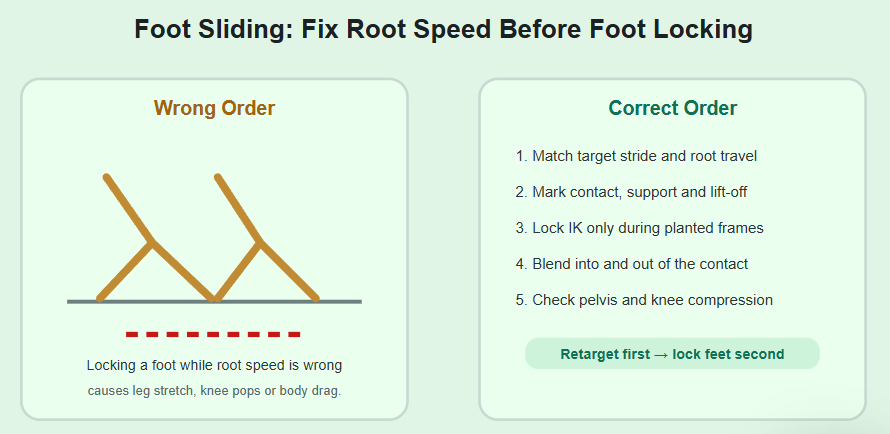
Epic dokumentiert Speed Planting als Lösung für retargetierte Füße, die gleiten, weil Quelle und Ziel unterschiedliche Beinlängen oder Stellungen haben. Überprüfen Sie vor dem Hinzufügen von Kontaktlogik die Retarget-Pose, das Becken und das Wurzelverhalten.

- Bestätigen Sie die Retarget-Posen von Quelle und Ziel.
- Überprüfen Sie das Beinketten-Mapping und die Ziel-IK-Ziele.
- Untersuchen Sie Beckenhöhe und Wurzelverschiebung.
- Konfigurieren Sie Speed Planting oder ein gleichwertiges IK-Retargeter-Kontaktverhalten.
- Verwenden Sie Control Rig-Korrekturen für verbleibende shotspezifische Kontaktprobleme.
- Validieren Sie beide Füße aus der Seiten- und Frontansicht.
Kombinieren von retargetierter Körperbewegung mit Gesichtsanimation
Der MetaHuman-Körper und das Gesicht sind separate Animationsgruppierungen im Sequencer. Ein Körper-FBX oder eine retargetierte Körper-Animation Sequence erstellt nicht automatisch Gesichtsausdrücke, Lippen-Sync oder Augenanimation.

Empfohlene Sequencer-Struktur
- Körper-Animation Sequence: die retargetierte QuickMagic Körperbewegung.
- Körper-Control-Rig: Kontakt-, Hand-, Requisiten- und Silhouettenkorrekturen.
- Gesichtsanimation oder Gesichts-Control-Rig: Gesichtserfassung, Lippen-Sync, Blinzeln und Blick.
- Kamera- und Audiospuren: unabhängig vom Körper-Retargeting ausgewertet.
Epics MetaHuman-Dokumentation weist darauf hin, dass Körperanimation auf die Körper-Skeletal-Mesh-Komponente angewendet wird und sich durch die Körperteile des Charakters ausbreitet. Diese Ausbreitung sollte nicht mit der Erstellung von Gesichtsausdrucks-Animation verwechselt werden.
Exportierte Clips vs. Laufzeit-Retargeting
| Ansatz | Verwendung, wenn | Abwägung |
|---|---|---|
| Ziel-Animation Sequences exportieren | Kinofilme, Asset-Bibliotheken, Kompression, Bearbeitung und vorhersagbare Lieferung | Erstellt zusätzliche Assets und muss nach Retargeter-Änderungen neu generiert werden |
| Laufzeit-Retarget-Pose From Mesh | Live-Charakter-Sharing, dynamisches Gameplay oder Reduzierung doppelter Animations-Assets | Erfordert Laufzeit-Blueprint-Setup und fortlaufende Leistungs-/Kompatibilitätstests |
| MetaHuman-Retarget-Komponenten-Workflow | MetaHuman-spezifische Live-Workflows, wo verfügbar | Kann auf experimentelle oder versionsspezifische Komponenten angew |