Video da smartphone → Movimento di personaggio modificabile
Motion Capture AI Gratuito dal Tuo Telefono: Guida all'Animazione 3D e 2D
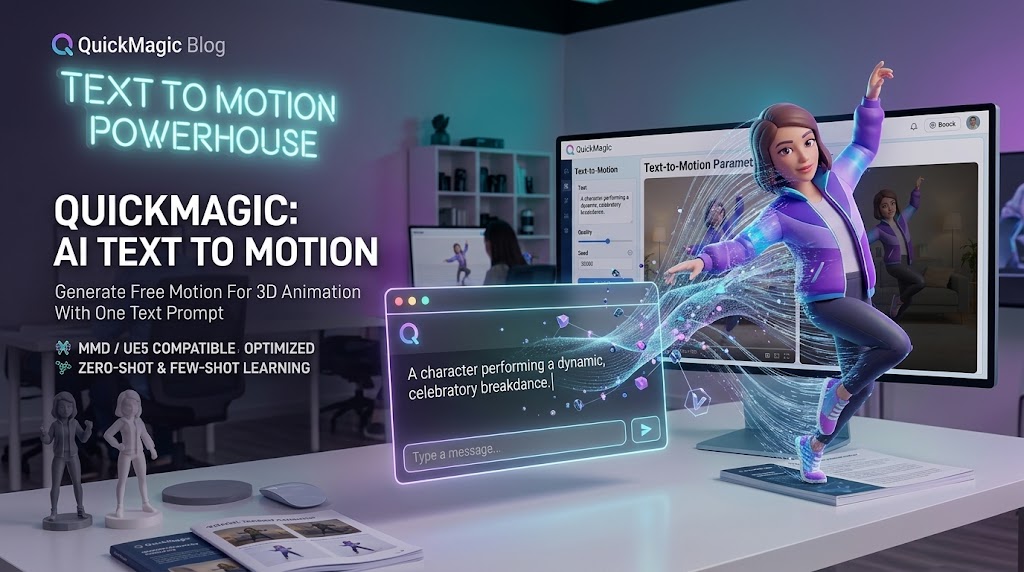
Registra una performance con un comune smartphone, convertila in animazione scheletrica modificabile con QuickMagic, riadatta il risultato a un personaggio 3D, oppure converti il movimento per un flusso di lavoro Reallusion Cartoon Animator G3 Human.

Fatti del piano gratuito attuale di QuickMagic
Guarda il tutorial originale da telefono ad animazione
Il video creatore originale mostra una performance registrata su telefono e utilizzata sia per l'animazione di personaggi 3D che per un flusso di lavoro con personaggio 2D Cartoon Animator.
Come funziona la trasformazione da telefono a motion capture
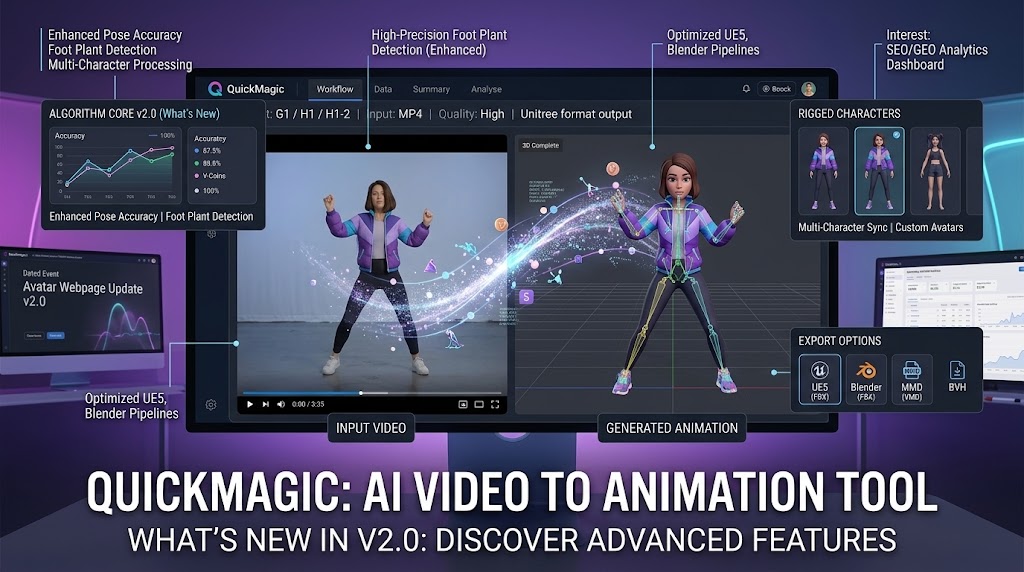
Il tuo telefono è il dispositivo di registrazione, non il computer di motion capture. QuickMagic riceve il video RGB caricato, stima la posa del performer nei vari fotogrammi, ricostruisce il movimento in 3D e scrive il risultato come dati di animazione scheletrica. L'animazione esportata può poi essere riadattata a un personaggio digitale.
Poiché l'input contiene solo le viste catturate dalla fotocamera, la ricostruzione è più affidabile quando le giunture rimangono visibili. Occlusione prolungata, motion blur, piedi tagliati, scarso contrasto e lavoro a terra estremo aumentano l'ambiguità.
| Fase | Cosa succede | Cosa controlli tu |
|---|---|---|
| Registrazione | Il telefono registra fotogrammi video ordinari | Inquadratura, illuminazione, nitidezza, movimento della fotocamera e performance |
| Stima della posa | QuickMagic traccia le caratteristiche visibili del corpo, delle mani o del viso secondo il flusso di lavoro selezionato | Selezione del soggetto, modalità di cattura e qualità della fonte |
| Ricostruzione 3D | Le stime della posa fotogramma per fotogramma diventano una gerarchia scheletrica in movimento | Selezione del modello/preset, suolo e opzioni di pulizia |
| Esportazione e riadattamento | Il movimento sorgente viene mappato su un personaggio di produzione | Preset scheletro, frame rate, posa di riferimento, contatti e root motion |
1Pianifica la cattura prima di premere Registra
- Decidi se hai bisogno di movimento per tutto il corpo, parte superiore del corpo, mani o volto.
- Scegli la cattura con fotocamera fissa a meno che l'inquadratura non richieda specificamente movimento della fotocamera.
- Conferma la destinazione: Blender, Maya, UE5, Unity, Cartoon Animator o un altro strumento.
- Scegli il frame rate target prima di registrare ed esportare.
- Mantieni la performance entro i limiti di durata e dimensione file del piano attivo.
- Decidi se la clip finale deve essere in-place o preservare lo spostamento della radice.
2Registra un video da smartphone tracciabile
Posizionamento della fotocamera
- Per il movimento di tutto il corpo, mantieni la testa e entrambi i piedi all'interno dell'inquadratura durante tutta la ripresa.
- Lascia margine per ampi movimenti delle braccia, salti e giravolte.
- Posiziona la fotocamera abbastanza lontano per ridurre la distorsione prospettica.
- Usa un treppiede o un supporto stabile a meno che il flusso di lavoro non sia configurato per una fotocamera in movimento.
Illuminazione ed esposizione
- Usa un'illuminazione frontale o laterale uniforme che mantenga gli arti leggibili.
- Evita una finestra luminosa direttamente dietro il performer.
- Impedisci al telefono di utilizzare un otturatore lento che produce un forte motion blur.
- Blocca messa a fuoco ed esposizione quando la fotocamera del telefono lo supporta.
Frame rate
Registra a 30 FPS per la maggior parte delle performance controllate. Usa 60 FPS per azioni veloci solo quando c'è abbastanza luce per mantenere i fotogrammi nitidi e il piano QuickMagic scelto e la destinazione supportano l'output desiderato. Un frame rate più alto non può recuperare giunture nascoste o silhouette sfocate.
| Performance | Approccio di registrazione suggerito | Rischio principale |
|---|---|---|
| Camminata, gestualità, recitazione corporea dialogata | 1080p stabile, 30 FPS, soggetto completamente visibile | Piedi tagliati ed esposizione lenta della fotocamera |
| Danza, calci, giravolte veloci | Illuminazione intensa, 60 FPS quando disponibile, margine extra nell'inquadratura | Motion blur, auto-occlusione e uscita dall'inquadratura |
| In ginocchio o contatto con il suolo | Inquadratura più ampia, pavimento visibile, angolo laterale-frontale | Arti nascosti e contatto ambiguo |
| Recitazione personaggio 2D parte superiore del corpo | Inquadratura dalla vita in su con mani e torso chiari | Mani che incrociano il corpo o escono dall'inquadratura |
3Carica e convalida il movimento in QuickMagic
- Trasferisci il file originale del telefono senza ricodificarlo tramite un'app di messaggistica.
- Accedi a QuickMagic e apri Video-to-3D Animation.
- Carica la clip e conferma che l'intervallo di fotogrammi corretto sia presente.
- Seleziona il soggetto e le impostazioni di cattura che corrispondono alla fotocamera e ai dettagli del corpo.
- Rivedi l'anteprima a velocità normale e fotogramma per fotogramma.
- Rigenera o perfeziona la fonte quando vedi scambi di arti, salti della radice o contatti persi.
4Esporta il file di movimento corretto
L'attuale piano gratuito pubblica l'esportazione FBX. I piani Starter e Professional elencano preset aggiuntivi come Unreal, Mixamo, BIP, VMD, Unity Anim, C4D, Character Creator/iClone e Roblox.
- Scegli lo scheletro o il preset software richiesto dal pipeline di destinazione.
- Abbina il frame rate di output al progetto.
- Preserva un'esportazione sorgente non modificata.
- Assegna un nome chiaro al file, ad esempio
Actor_Walk_Phone_Source_30fps.fbx. - Testa una clip breve prima di elaborare un lotto grande.
Flusso di lavoro 3D: video da telefono a personaggio 3D
- Importa il FBX di QuickMagic. Crea o seleziona lo scheletro sorgente nel tuo DCC o motore di gioco.
- Prepara il personaggio target. Conferma il rig target, le proporzioni e la posa di riferimento.
- Mappa gli scheletri. Usa il sistema di riadattamento dell'applicazione.
- Convalida i contatti. Controlla piedi, mani, oggetti di scena, traiettoria della radice e altezza del pavimento.
- Rifinisci l'animazione target. Risolvi i problemi introdotti da diverse proporzioni del personaggio.
- Esporta o integra. Cuoci solo dopo aver verificato il flusso di lavoro modificabile.
| Software | Flusso di lavoro tipico | Area principale di pulizia |
|---|---|---|
| Blender | Importa FBX → mappa ossa → riadatta a Rigify/rig personalizzato | Scala, root motion, contatti dei piedi e pulizia delle curve |
| Maya | Importa FBX → caratterizza con HumanIK o riadattatore dello studio | Posa di riferimento, contatto con il suolo e layer di animazione |
| Unreal Engine 5 | Importa scheletro sorgente → IK Rig → IK Retargeter | Posa di riadattamento, root motion e scivolamento del piede target |
| Unity | Importa FBX → configura Avatar Umanoide → Animator | Mappatura Avatar, trasformazione radice e IK del piede |
| 3ds Max | Importa FBX → riadatta a CAT/Biped/rig personalizzato | Inversioni di rotazione, densità dei keyframe e contatti |
Flusso di lavoro 2D: movimento di QuickMagic per Cartoon Animator
Passo 1: Converti l'output di QuickMagic
Se parti da FBX, usa un flusso di lavoro Reallusion compatibile per convertire l'animazione umana in un formato di movimento accettato da Cartoon Animator. Reallusion documenta l'importazione di motion umano FBX o BVH tramite Character Creator per l'uso in iClone; il percorso esatto dipende dalle versioni e licenze del prodotto installate.
Passo 2: Usa un personaggio G3 Human supportato
La documentazione attuale di Import 3D Motion di Reallusion specifica i personaggi G3 Human. Applica un G3 Human compatibile o un Dummy per 3D Motion prima di caricare la clip convertita.

Passo 3: Apri Import 3D Motion
- Seleziona il personaggio G3 Human.
- Apri Animation → Import 3D Motion o il corrispondente pulsante della barra degli strumenti.
- Carica il motion convertito compatibile.
- Anteprima del dummy 3D e del personaggio 2D insieme.

Passo 4: Scegli l'angolo di proiezione della fotocamera
Un motion 3D può ruotare liberamente, ma un personaggio 2D è costruito da un set limitato di sprite con angoli di faccia. Scegli l'angolo di proiezione che corrisponde al design del personaggio. Reallusion documenta i concetti di fronte, fronte-lato, lato, retro-lato e retro.

Passo 5: Applica e perfeziona il movimento
- Anteprima del dummy 3D e del personaggio 2D insieme.
- Abilita Camera Tracking se il personaggio si sposta fuori schermo durante l'anteprima.
- Regola velocità, taglio e proiezione del movimento.
- Usa le impostazioni di Ground Offset e postura del corpo per migliorare il contatto.
- Clicca Apply to Timeline e modifica il risultato 2D.


Come migliorare la qualità del mocap da telefono
| Problema | Correzione in registrazione | Correzione in animazione |
|---|---|---|
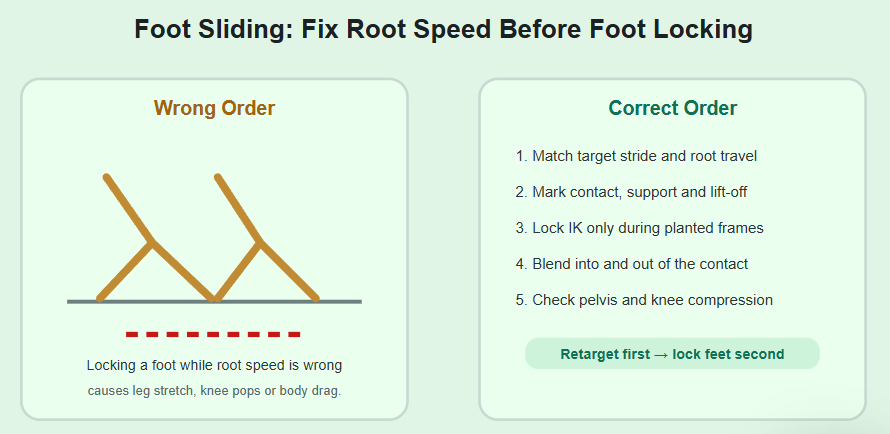
| Scivolamento dei piedi | Mantieni i piedi visibili e registra un piano del pavimento chiaro | Correggi la velocità della radice e il contatto del piede target dopo il riadattamento |
| Jitter | Usa luce più intensa, fotocamera stabile e file video originale | Applica smoothing selettivo piuttosto che filtrare l'intero scheletro |
| Arto sbagliato dopo incrocio braccia | Cambia angolo della fotocamera o riduci l'auto-occlusione prolungata | Correggi la traccia sorgente o rigenera prima dell'esportazione |
| Ginocchio o gomito che scatta | Aumenta la visibilità degli arti e riduci la sfocatura | Ripara la posa di riadattamento, la direzione del polo e i keyframe locali |
| Distorsione dello sprite 2D | Scegli un movimento appropriato per gli angoli disponibili del personaggio | Cambia angolo di proiezione, Flip Body, postura e impostazioni delle mani |